UPDATE 2/25: Community Board 3 voted to refer this matter back to the land use committee in March, “to ensure we are capturing all stakeholder input.” We’ll have more details at thodownny.com in the next few days.
Members of Community Board 3 (CB3) next week will be asked to support changes in the management of the Essex Market. CB3’s land use and housing committee drafted a resolution in a virtual meeting February 11 which raised serious concerns about market operations under the oversight of NYC’s Economic Development Corporation (NYC EDC). At the full board meeting taking place Tuesday, February 24, members will vote whether to ask the city administration to turn over day-to-day management of the market to the Lower East Side Partnership.
When the market moved from the north to the south side of Delancey Street in 2019 as part of the Essex Crossing project, a joint management structure was put in place. NYC EDC, as owner of the market, maintained overall management authority. Delancey Street Associates, the consortium that built Essex Crossing, handled operations and maintenance. The LES Partnership, meanwhile, signed a contract with the city to provide support services (community programming, vendor services, etc.). But after Delancey Street Associates shuttered the Market Line, a food hall in the basement below Essex Market, the EDC took over daily management responsibilities. The Partnership’s contract expires later this year. Rather than simply renewing the contract, the city plans an open bidding process (via a Request for Proposals, or RFP).
At last week’s meeting, LES Partnership President Tim Laughlin walked committee members through the lengthy draft resolution. It stated, “There continue to be unresolved management and operational management challenges” at the Essex Market, including concerns about cleanliness of the facility, upkeep and security. The resolution referred to reports of, “a culture with the security staff at Essex Market that creates an unwelcome environment for patrons” and “an intimidating environment for vendors, staff and contracted partners that has, at times, been based on a fear of retaliation.” The draft also referenced the city’s decision not to renew funding for the Essex Market Vendor Association, which supported a vendor coordinator, instead requiring the LES Partnership to hire a consultant who prioritized private rentals of the kitchen and mezzanine space on the second floor.
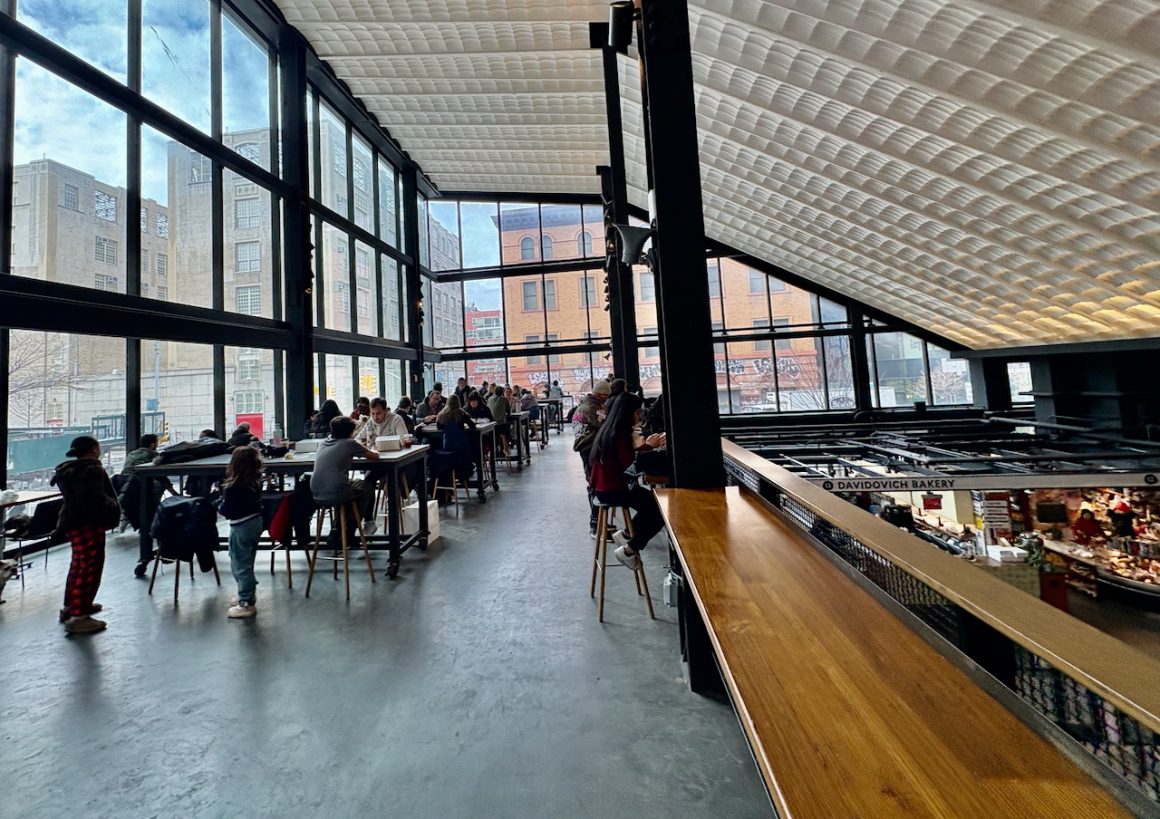
If the resolution is approved by the full board, CB3 will ask the city for an “alternative management structure” at the Essex Market with the LES Partnership providing day-to-day management services, including property management, cleaning and maintenance, security, marketing and community programming. A community-based working group would be created to provide management guidance, with membership from NYC EDC, Community Board 3, local elected officials and vendors. NYC EDC would still have oversight responsibilities at the market and continue to provide funding for operations.
If the proposal is rejected, the draft resolution lays out a second option. It calls on the city to provide adequate staffing to facilitate, “cleanliness and general upkeep” at the market, “empower the market manager to make decisions without fear of retaliation” and to relocate NYC EDC staff occupying the offices on the second floor of the market. The committee also wants to see the city relinquish control of the second floor mezzanine and kitchen and allow the LES Partnership the freedom to manage community events and marketing. Regardless of which option EDC chooses, the community board is looking for the city to allocate funding to, “resolve longstanding infrastructure failures,” including waterproofing, additional kitchen improvements and better/expanded public restrooms.

When the Market Line closed, the staircase leading from the Essex Market to the basement was blocked off and covered with a decorative tarp. The draft resolution proposes a “collaborative process” to re-activate that space (there’s been talk of closing access to the basement permanently) as well as a vacant restaurant space located on the southeast corner of the market.
EDC officials attended the meeting and responded to certain points detailed in the resolution. Referring to the request to relocate EDC staff from offices in the market, they explained that their presence was meant to create greater collaboration between vendors and EDC market managers. They also pointed out that recent kitchen renovations were undertaken to improve the usability of the space. As for the decision to de-fund the vendor coordinator position, they noted that there was a cumbersome process for funneling requests from the coordinator to EDC staff. They believe it works better for vendors to be in direct communication with EDC’s market staff.
At another CB3 meeting in December, Gigi Li, a vice president at EDC (and a former CB3 Chairperson), addressed the decision to seek bids from groups interested in coordinating community programming at Essex Market. She said it was no reflection on the LES Partnership’s performance under its current contract, but was being undertaken due to “legal and operational” concerns and to ensure a competitive bidding process. At another CB3 land use committee meeting held last fall, Li spoke more generally, saying, “EDC is very much committed to the success of the Essex Street Market.” She noted that vendors who made the move from the old Essex Market across the street were guaranteed “legacy rents” (at below market rates). Li emphasized that the city understands and continues to support the important role the Essex Market plays as a community resource on the Lower East Side.

At the end of January, Community Board 3 sent a letter to Mayor Mamdani asking the city to delay the RFP for management services at the market until the larger concerns around Essex Market operations can be addressed. As of the February 11 meeting, there had been no response from the Mamdani Administration.
The letter detailed the community board’s long history of advocacy on behalf of the vendors, going back more than a decade. In 2015, four years before the move to the new facility, vendors sounded alarm bells, warning that EDC management of the market was imperiling their future. They were worried about the prospect of going out of business before the new market even opened (several vendors were forced to shutter or relocate). At the time, they pleaded for alternative management. City officials were unwilling to relinquish control, but did bring in the LES Partnership to coordinate marketing, “empowered the Vendor Association” and hired a consultant, Market Ventures, to explore different models for Essex Market management.
All of these deliberations were part of Community Board 3’s larger commitment to shaping the Essex Crossing project on the former Seward Park Urban Renewal site. The board prioritized protection of the legacy vendors at the Essex Street Market. Those protections and the city’s investment in an expanded market facility were key community amenities negotiated as part of the larger agreement that ultimately led to the development of Essex Crossing.
That letter to Mayor Mamdani also brought up the city’s recent decision to allow Delancey Street Associates (DSA) to lease the former Market Line space to Burlington Coat Factory (it remains to be seen whether the retailer and DSA will be able to finalize a lease agreement). CB3 urged the mayor to rescind the approval for Burlington Coat Factory and to allocate the former Market Line space for community-oriented uses. The board argued that the decision violates the spirit and letter of Essex Crossing’s operating agreement, which placed limits on big box stores and prioritized small-scale retail. Rohan Mehra, who oversees retail at Essex Crossing, has told CB3 that there was very limited interest in the former Market Line space (it’s dark, in a basement and features numerous support columns, making the space unsuitable for many potential tenants). EDC officials contend that since Delancey Street Associates owns the space, the city has very limited control. EDC believes the Burlington proposal is in keeping with the operating agreement.
Laughlin (from the LES Partnership) suggested a way forward for both Essex Crossing and the Essex Market. The new market and the Market Line were both heavily impacted by the pandemic, which struck just a few months after opening. In its original plan, the Market Line was meant to stretch across three buildings with underground passageways connecting each space. Vital Climbing Gym now anchors one building. The new cultural center, Canyon, will soon open in another space, part of which was originally intended for the Market Line. Community board members have expressed concerns about the negative impact Burlington Coat Factory could have on longstanding small businesses in the immediate area. Laughlin said it’s more important than ever, since the market is now the only small business hub in the Essex Crossing project, to make sure it’s as sustainable as possible. The implication was clear — strong, responsive management and a commitment to fully utilizing all available spaces, are critical to ensuring the vitality of the market in the years ahead.
The full board will vote on the resolution Tuesday, February 24. The meeting takes place at P.S. 20, 166 Essex St. and begins at 6:30 p.m.