For a lot of museums, an on-site restaurant and bar might be a nice amenity for visitors. But in the case of Canyon, the new cultural venue opening on the Lower East Side later this year, food and drink are integral to the concept, “a hybrid between museum, performing arts venue and the downtown social scene.” So it was an important step forward for the project when Community Board 3 this past week offered its support for Canyon’s quest for a liquor license in a subterranean space in the Essex Crossing development.
The 42,000 square foot cultural destination at 200 Broome St. will be devoted to music, video and performance. The restaurant will serve a maximum of 1,326 people, with two bars in the main dining area and a third bar in an upstairs cafe. There will be multiple LED walls, DJs and live music.
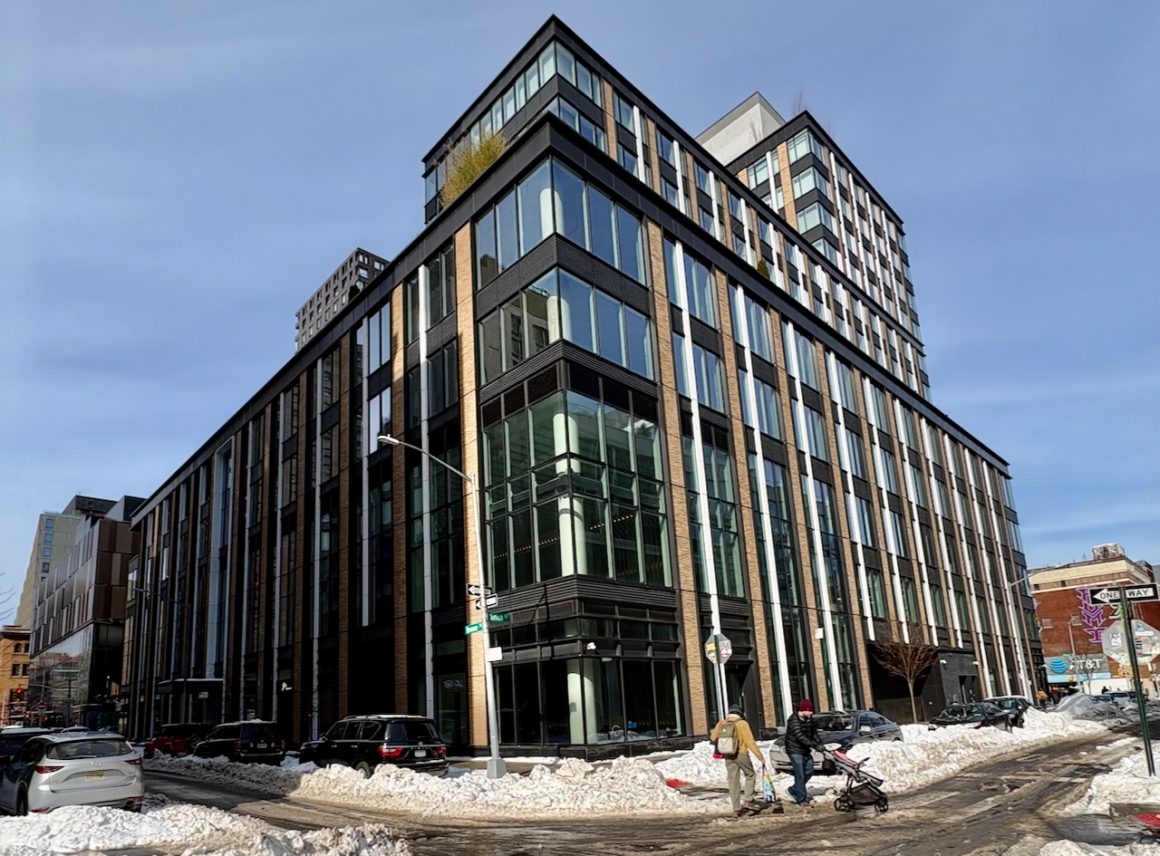
The space was originally supposed to be part of the Market Line, the expansive small-scale retail market concept abandoned by the Essex Crossing developers in 2024. It includes a 60-foot high atrium that the Canyon team is refashioning as, “a central gathering space.” According to the museum’s website, the venue will be, “designed to encourage leisurely flow between socializing and enjoying art” and the bar and cafe, “will function as a communal hub” similar to a “town square, where visitors can linger, reconnect, and return throughout the evening.”
The applicants requested a 2 a.m. closing time for the dining and drinking establishments to accommodate occasional special events. But they indicated that regular closing time for the facility would be 10 p.m. A traffic flow analysis commissioned by Canyon predicted 148,000 annual visitors. There will be two entrances — one on Delancey Street and another on Suffolk/Broome Street. Most visitors are expected to arrive via public transit, rather than by car.
Canyon was founded by the financier and philanthropist Robert Rosenkranz. The Rosenkranz Foundation purchased the commercial space at Essex Crossing for $15 million. Construction costs are expected to be close to $10 million.
The community board only plays an advisory role when it comes to liquor permits. The decision is up to the State Liquor Authority.