Photo: Mavis-Jay Sanders, Culinary Director of Community Kitchen with founder Mark Bittman [Photo credit: Community Kitchen]
Food journalist, former New York Times recipe columnist and author of the renowned cookbook How To Cook Everything, Mark Bittman is creating a new type of restaurant with a focus on equitable access for all involved. The pilot project, Community/KITCHEN, is a non-profit public restaurant model that will be based in the LES and will operate on a sliding scale for diners.
The concept combines locally sourced, seasonal meals made by workers being paid a living wage.
The restaurant will pay staff in excess of $32 an hour, and menu prices will be tiered at $15, $45, and $125 for diners to select what they can afford.
Located at The Lower East Side Girls Club at 7th Street and Avenue D, they plan to serve dinner for the next three months, Wednesday through Saturday, beginning September 19th.

I talked with Bittman and two members of his team, Executive Director Rae Gomes and Culinary Director Mavis-Jay Sanders about the endeavor and how it came about:
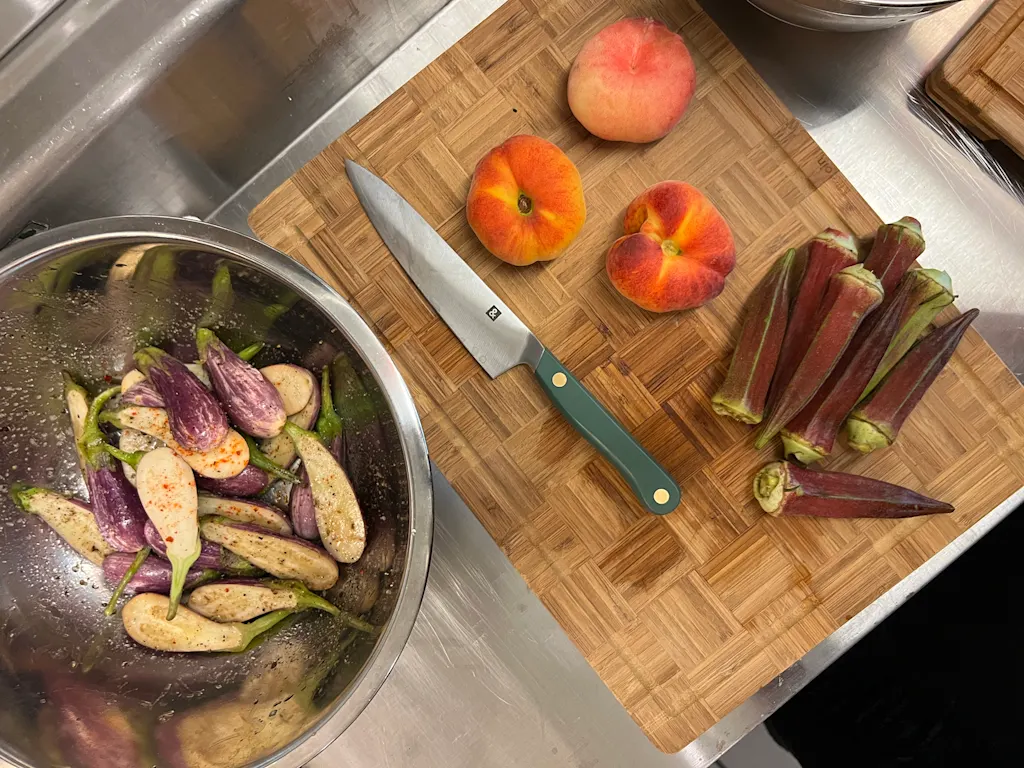
“When I decided I’d had enough of writing or at least of writing full time, I thought I wanted to do something,” Bittman said. “I wanted to do something in food, and I wanted to do something in good food. And I first thought it was important for me to come up with a definition of what good food is, and it’s pretty simple, but people weren’t saying it. It’s food that’s sourced well, sourced from farmers who care about the land and care about the crops and care about their workers. Handled by workers who are being treated respectfully, which as you probably know has been long been a problem in the food chain. Cooked well, deliciously, nutritiously, wholesomely. And then made accessible to everybody.”
“Those first three things kind of define good food in most cases but the fourth thing is what gets ignored a lot, which is you know you can go to a great restaurant that does that other stuff, but it’s only accessible to people who pay $100 to $150 per meal. So how do you make it accessible? You do a sliding scale. How do you do a sliding scale? You do a non-profit. So I kind of woke up one morning and said, okay, I’m gonna do a nonprofit restaurant.”
From there he started to raise money and build his team with some “willing consultants,” including his partner, Kathleen Finlay, who is president of the Glynwood Center for Regional Food and Farming.
The culinary director, Mavis-Jay Sanders is a James Beard award-winning chef and activist working at the intersection of food and social justice, and met Bittman at God’s Love We Deliver as a culinary counsel member. Their executive director, Rae Gomes, is a founder & principal at Cultivating Justice LLC, a co-founder at Central Brooklyn Food Cooperative and an Urban Design Forum Fellow with a Food Equity focus.
Florence Fabricant noted in The New York Times that the advisory board “includes heavy hitters like Alice Waters, José Andrés, Marion Nestle, Saru Jayaraman and Karen Washington.”
The core team toured a lot of different locations and sites but landed on the Lower East Side Girls Club after seeing the space they had available. Gomes explained, “We wanted [the site] to align with our values. I call it scenario planning because it wasn’t just the location, it was also the partnerships. It was the neighborhood. It was like, how can we tell the story of Community Kitchen in a way that’s connected to the neighborhood and the community. And based on those scenarios, what feels good and aligned with what we’re trying to do here was this space.”
I asked how they will define success now and what the vision is for what happens three months from now, after this trial period.
Because it’s a pilot, success looks like getting a lot of feedback,” Gomes said. “Making sure that people are able to share with us, able to tell us how they feel. I don’t think New Yorkers are shy about telling us how they feel, but we’re hoping to create different types of spaces so that different people can feel empowered to tell us how they feel. And we’ll see the folks from the community. We’re really interested in their feedback…and I’m just really interested in seeing what comes out of this…Like what actually would happen when we bring people together in a space that is not censoring profit, that is really about bringing people together, having connection, having this delicious food that Mayvis-Jay is preparing for us, having this atmosphere where the hospitality staff is paid well and taken care of right?”
“We want people to come here and relax and enjoy themselves and eat well and hang with people they wouldn’t ordinarily hang with, Sanders said.”And be in a space that they wouldn’t ordinarily be in and be able to be comfortable in every aspect of that. Whether that aspect means they can afford a meal they wouldn’t ordinarily be able to afford, or whether that aspect means they’re paying more than they might ordinarily pay, in order for other people to [come and] support our mission.”
“Also, we are hoping to do a longer term version of this,” Bittman said. “And if it happened on the Lower East Side, we’d feel really happy. That would be one measure of success. If we said, we’re staying on the Lower East Side. We we feel welcome. We feel like we’ve made ourselves a part of the community.”
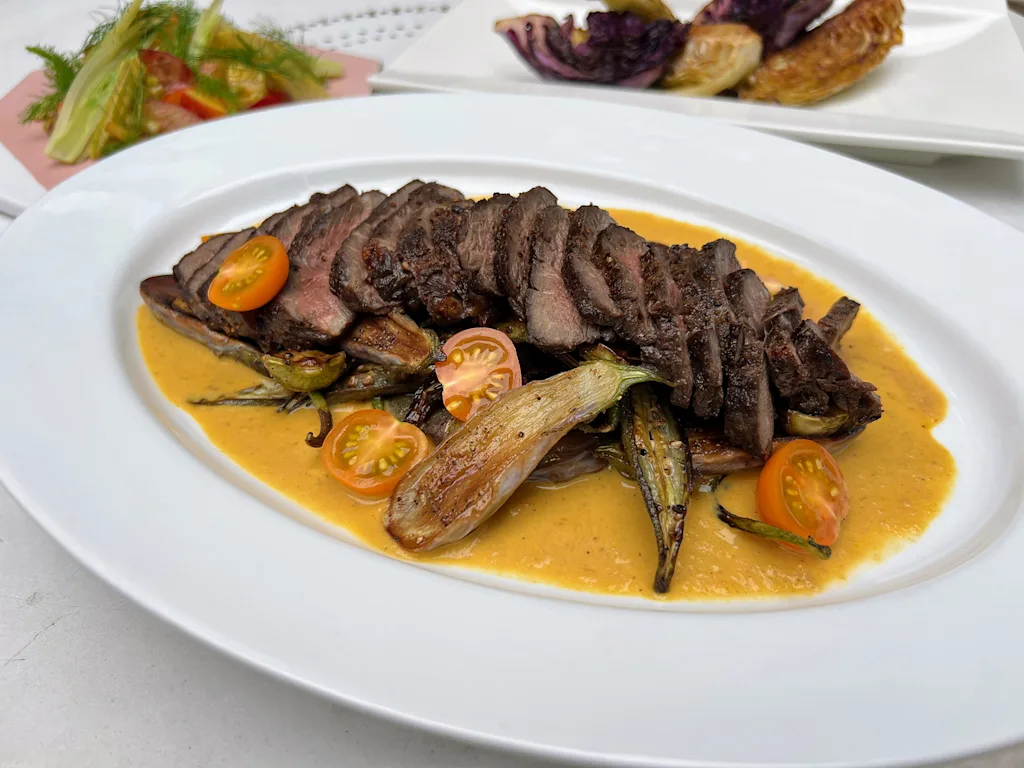
“We want people to come here and feel like you’re going to your favorite cousin’s house, you know,” added Sanders. “I want things that like are familiar. I want to do food that’s familiar, but also things that people wouldn’t expect, you know, things that are surprising. I don’t want to [get] too far away and have people be like, oh, I didn’t see myself in that food at all. And the neighborhood itself is very diverse and so we want to pull from different different cuisines and, know, do our take and tell people’s stories.”
Bittman added, “I think if you combine the [living wage] mission we’ve talked about with the sliding scale and Mavis-Jay’s attitude about hospitality and comfort, and our ability to source from local farmers who deserve support, and put that food on the menu, and be willing to change the menu when the food the farmers have [available] changes, it’s just gonna be great.”
“I think we’re gonna redefine what it means to be a great restaurant,” Sanders said.
“Wouldn’t that be something?” Bittman added.