You probably read the big news last week about the mayor’s decision to walk away from the city’s previous plan to build affordable housing at the Elizabeth Street Garden. As part of an agreement with the developers of that project, who sued the city, he’s moving forward with a new proposal for affordable housing at 22 Suffolk St. on the Lower East Side. Today we’re taking a closer look at what may be in store for the empty lot, which was once part of an unprecedented community planning process for the former Seward Park Urban Renewal Area (SPURA).
You can read in detail about the saga at the Elizabeth Street Garden elsewhere, but here are the basics. After championing the plan to build 123 units of senior housing on Elizabeth Street for most of his time in office, Mayor Adams changed course last summer. He announced that the city would heed the pleas of garden activists and build affordable housing on other sites.
Adams’ team identified three development parcels: 22 Suffolk St., 156-166 Bowery and 100 Gold St. The developers – Pennrose, Habitat for Humanity and RiseBoro Community Partnership – filed a lawsuit challenging the city’s decision to derail their project, known as Haven Green. Meanwhile, during last year’s mayoral election, Zohran Mamdani pledged to move forward with affordable housing on Elizabeth Street. The Adams Administration responded by transferring the Elizabeth Street site to the Parks Department, making it difficult for any future administration to develop housing there.
Last week Mayor Mamdani asserted that pressing ahead with Haven Green on Elizabeth Street was impossible, since it would have required approval from the State Legislature to allow development on a site designated as parkland. So he pivoted. “As part of our commitment to building the affordable housing New Yorkers urgently need,” said mayoral spokesperson Matt Rauschenbach, “we are moving forward to deliver over 180 affordable homes at 22 Suffolk Street.“
In a statement, District 1 City Council member Christopher Marte called the announcement from the Mayor, “a true win-win for Lower Manhattan.” He added, “I want to thank Mayor Mamdani and his administration for finding a path forward that preserves the Elizabeth Street Garden while delivering an unprecedented amount of permanently affordable housing in our community. For years, people were told they had to choose between protecting one of our neighborhood’s most cherished green spaces and building desperately needed affordable housing. This agreement proves that with creativity and a willingness to listen, New York City can do both.”
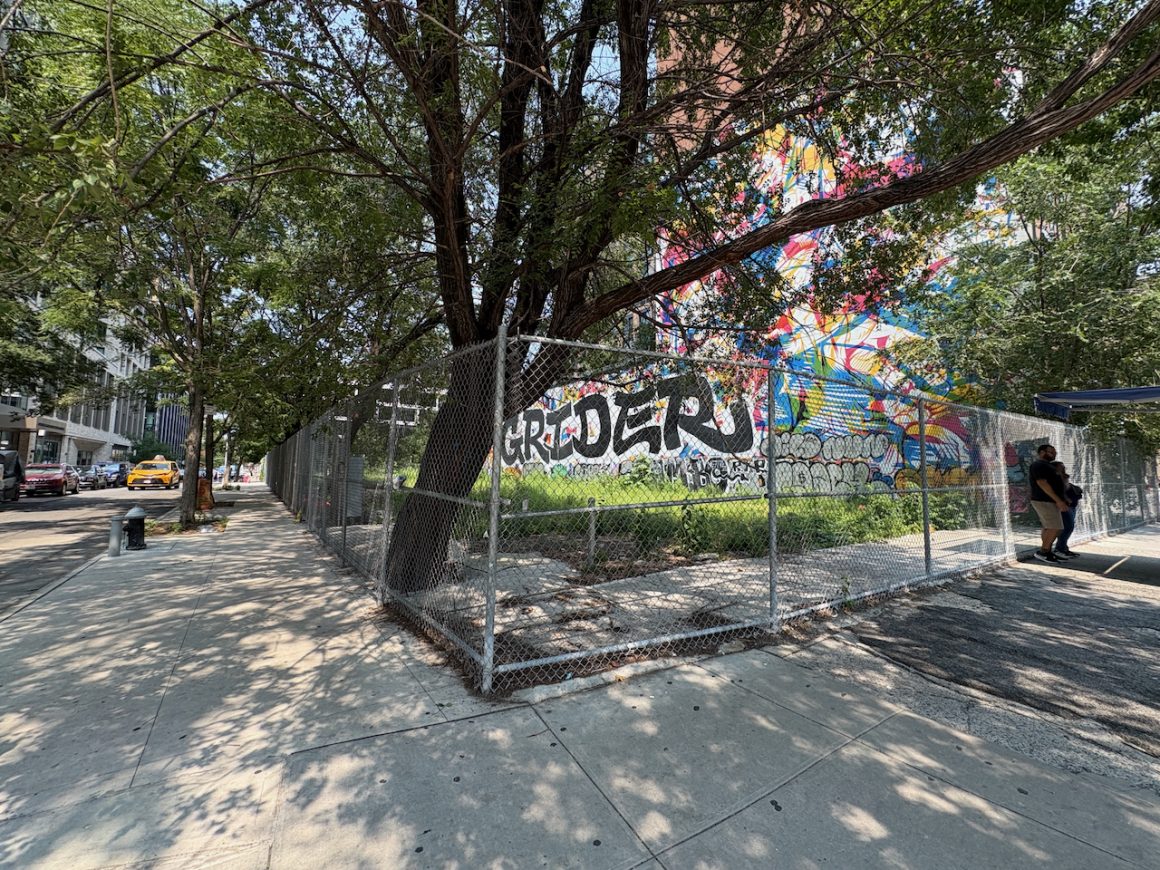
Here’s what we know so far about plans for the lot, which is located on the northeast corner of Suffolk and Grand streets. Rauschenbach told Gothamist that 120 rental apartments would be for low-income seniors, with the remainder reserved for other low-income households. He also said the land use review process for the parcel would probably begin in the middle of next year.
If the site undergoes ULURP (Universal Land Use Review Procedure), the proposal would be heard by the local community board, the Manhattan Borough President, the City Planning Commission and the City Council. ULURP usually takes about 9 months to complete.
Last summer, according to Gothamist, Adams’ first deputy mayor, Randy Mastro, claimed, “There’s going to be shovels in the ground at the end of the year (at 22 Spring St.) or certainly by early 2026.” In a letter to Mastro dated June 6, 2025, Council member Marte agreed to support zoning changes necessary for housing on all three parcels, including 22 Suffolk. He wrote, “Contingent on the aforementioned Garden Preservation, I am committed to supporting a rezoning of this site to an R10A district, with a C2-5 commercial overlay, to build a 100 percent affordable housing development of approximately 200 units. I am additionally committed to supporting the designation of this site as an Urban Development Action Area Project.”
That was an agreement made during the previous mayoral administration. It remains to be seen what specific zoning changes the Mamdani Administration has in mind now. Gothamist reported that the Urban Development Action Area designation would allow the project, “to skirt the typical land use process.”

The lot at 22 Suffolk is owned by the city and has a unique history. As part of the former Seward Park Urban Renewal Area, the site has been the subject of contentious community-wide debates since the demolition of tenement housing across multiple blocks of the Lower East Side in 1967. After many failed efforts to redevelop the parcels, the city agreed to work with Community Board 3 to create a consensus plan. In January of 2011, CB3 approved planning guidelines, calling for a mixed-use and mixed-income project on the former SPURA site.
The key sticking point was always affordable housing. In the end, community members reluctantly settled on 50% affordable housing for low- and middle-income households and 50% market rate housing. The City Council and City Planning Commission approved the Seward Park plan the following year.
At the time, then City Council member Margaret Chin announced a side agreement with the city administration to build additional affordable housing on the site of the Elizabeth Street greenspace. This revelation set off a years-long battle for the future of the garden. So, in a way, the Seward Park parcel and the Elizabeth Street space have always been linked.
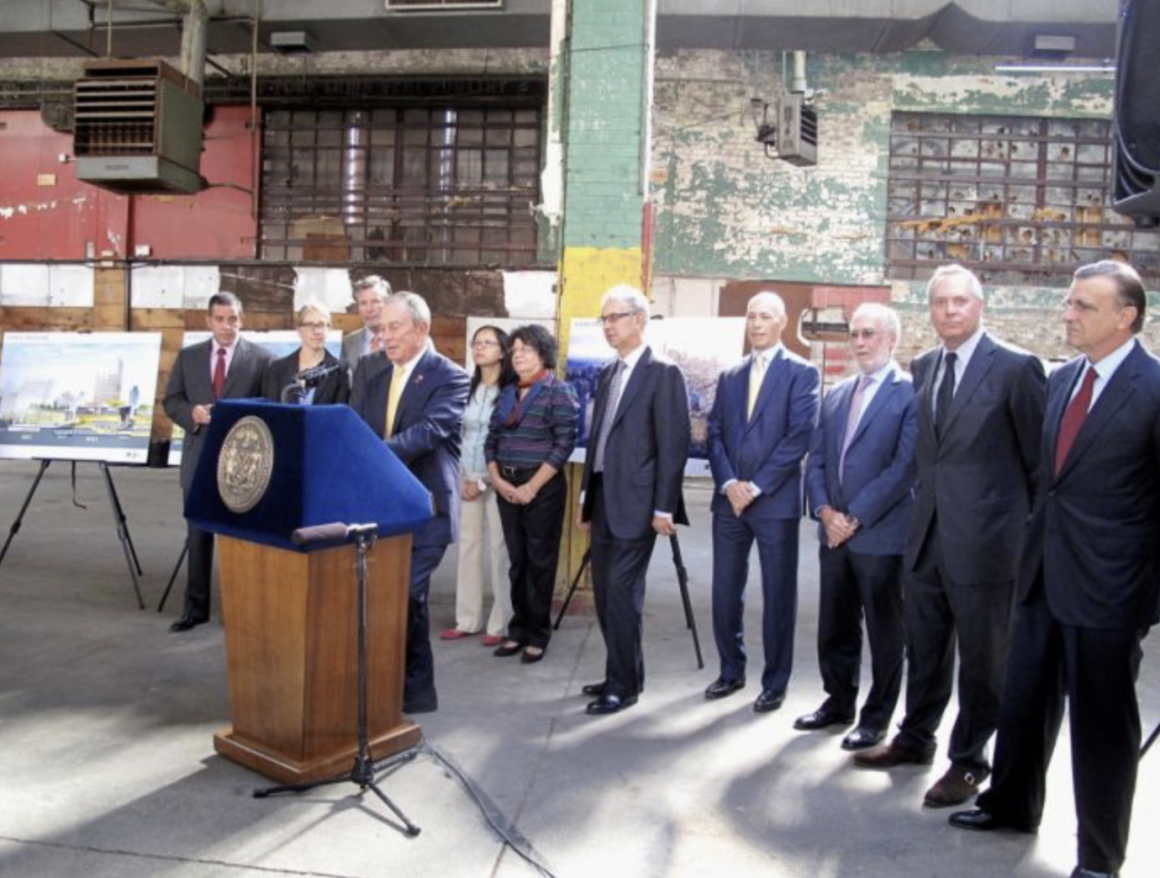
In 2013, the city awarded a contract for the site to Delancey Street Associates, a consortium led by L+M Development Partners, BFC Partners and Taconic Investment Partners. The project would be known as Essex Crossing.
A big community priority all along was the inclusion of a pre-kindergarten to eighth grade school on the former Seward site. The development team was required to set aside a 15,000 square foot lot at 22 Suffolk St. for the school until the year 2023. At the time the Seward Park plan was approved, the School Construction Authority contended that there was no need for a new school on the Lower East Side and declined to provide funding. CB3 made the case for the school repeatedly, publishing an “Essex Crossing School” position paper in 2014 and enlisting local elected officials to advocate with the city administration on their behalf. In recent years, the School Construction Authority has cited declining Lower East Side school enrollment to reinforce its decision.
While the 2023 deadline to approve a school on Suffolk Street passed long ago, Mayor Mamdani’s decision to build housing on the site likely marks the official end of CB3’s quest for a school. While it was a high priority, so is affordable housing. Many of the community activists who pushed for more affordable housing on the SPURA site may very well be pleased to learn that 180+ units of deeply affordable housing are on the horizon.
But Susan Stetzer, CB3’s district manager, has been outspoken about the city administration’s decision to move forward with housing on the Suffolk Street site without engaging with the community board. “The current CB3 position for 22 Suffolk, voted on years ago, is that this should be site of new school. CB3 also has had affordable housing as its highest priority for over 20 years,” said Stetzer. “A few months ago, we commissioned a report to look at which bands of affordable housing are most needed, which locations in the community board most need the affordable housing, and what size apartments are needed. We are very disappointed that the administration is not talking to us and working with us to best serve our very underserved community.” She continued, “We had very high expectations for working with the new administration. CB3 positions are aligned with those of the administration—and we work with amazing staff at the Office of Mass Engagement. However, it is very disappointing that the administration does not understand why it is beneficial for all to work with the community and community boards, which are the means of communities participating in planning.”
CB3’s current District Needs Statement (FY27) continues to prioritize a school at Essex Crossing. The community board has often argued that the School Construction Authority’s analysis is too narrow and flawed. CB3 stated, “Community School District 1 schools are outdated and under-resourced; many schools cannot update their facilities and require students from multiple schools to share common areas.” The new District Needs Statement, currently being drafted, maintains the need for a new school on Suffolk Street.
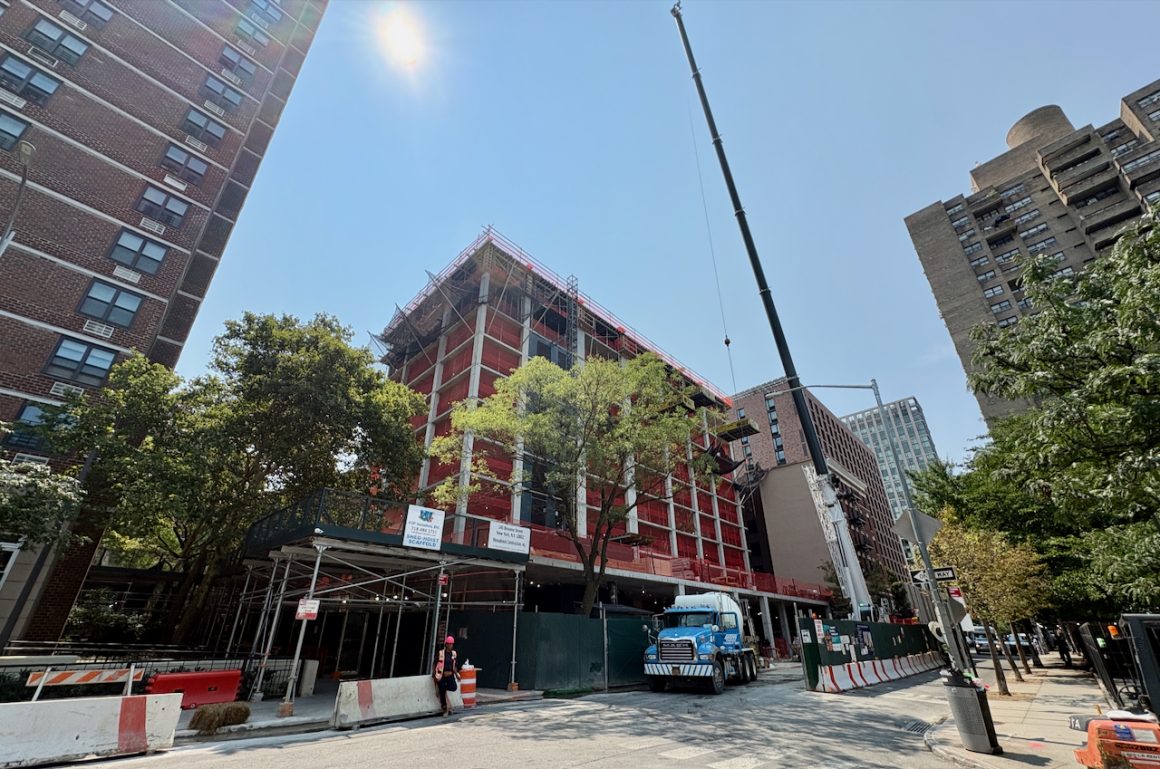
Just this week, the city administration released a draft of a report showing New York must build 700,000 new homes during the next decade to alleviate the worsening housing crisis. It showed that the Lower East Side and Chinatown need to create more than 7,400 housing units to meet 2030 goals. Housing officials often say every neighborhood must do its part. This particular area of the LES has built a lot of new housing in the past decade.
Counting six new buildings on the former urban renewal site (from Ridge Street to Ludlow Street), more than 900 apartments were created. Other projects have also been undertaken, including a large complex from the Gotham Organization located just across the street from 22 Suffolk. They added another 900 apartments. This is on top of more than a thousand affordable units built in the 1970s by the New York City Housing Authority (Seward Park Extension), the Grand Street Guild and the Chinese American Planning Council (Hong Ning Senior Housing). Including a senior housing building now under construction behind St. Mary’s Church, approximately 370 of the apartments in the area are reserved for low-income seniors.
A 2025 report by the Pratt Center for Community Development (commissioned by CB3) found, “There is a need for new construction of affordable studio and 1-bedroom apartments targeted to extremely low-income seniors.” Pratt researchers also concluded, “New construction of affordable housing should be prioritized for high-income census tracts that have seen little affordable housing production, to the extent possible.” The authors noted, “New construction (of) affordable units were all located in 6 of CB3’s 31 Census Tracts, more than half of which were in the Essex Crossing developments in one census tract.”