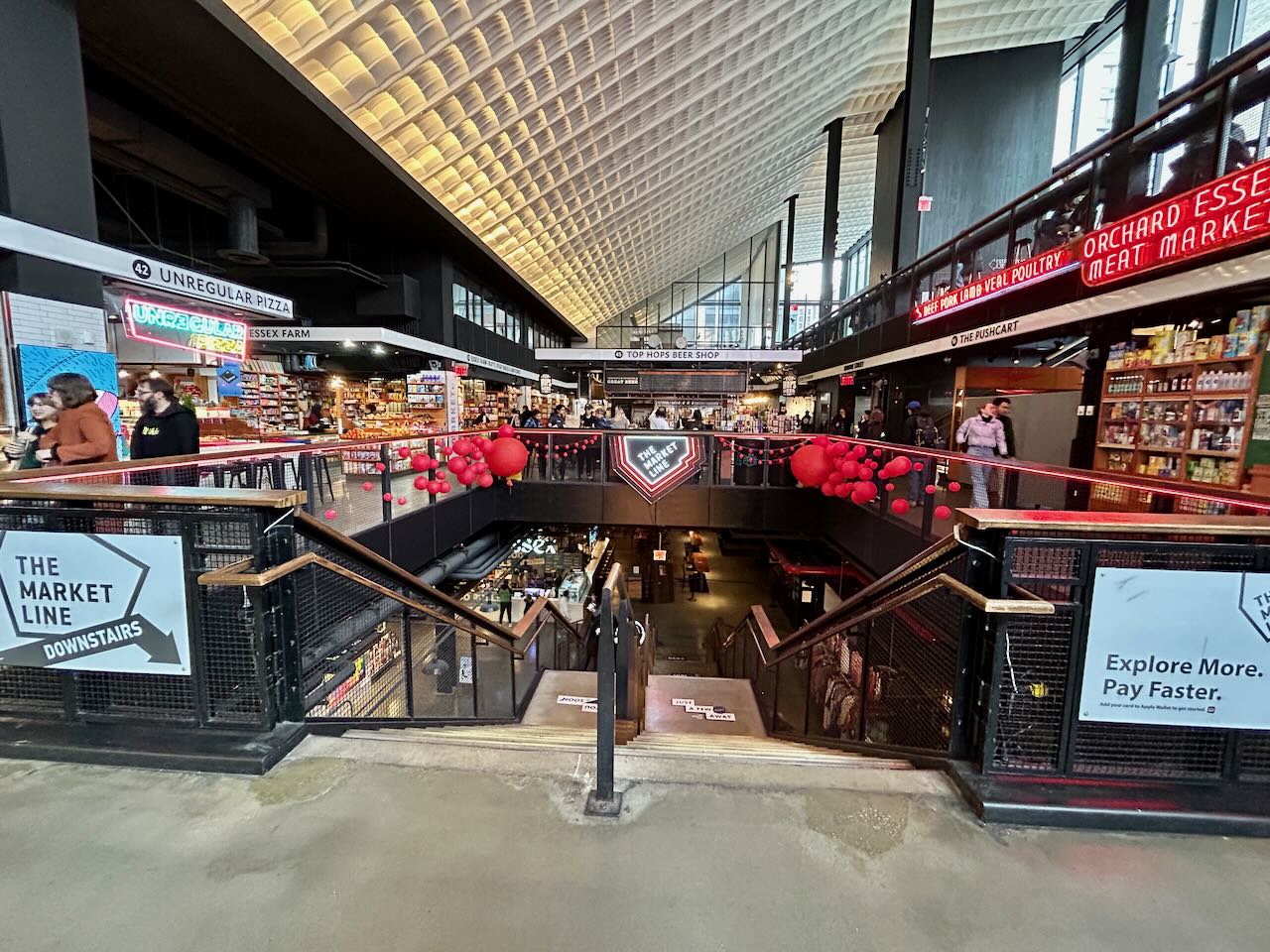
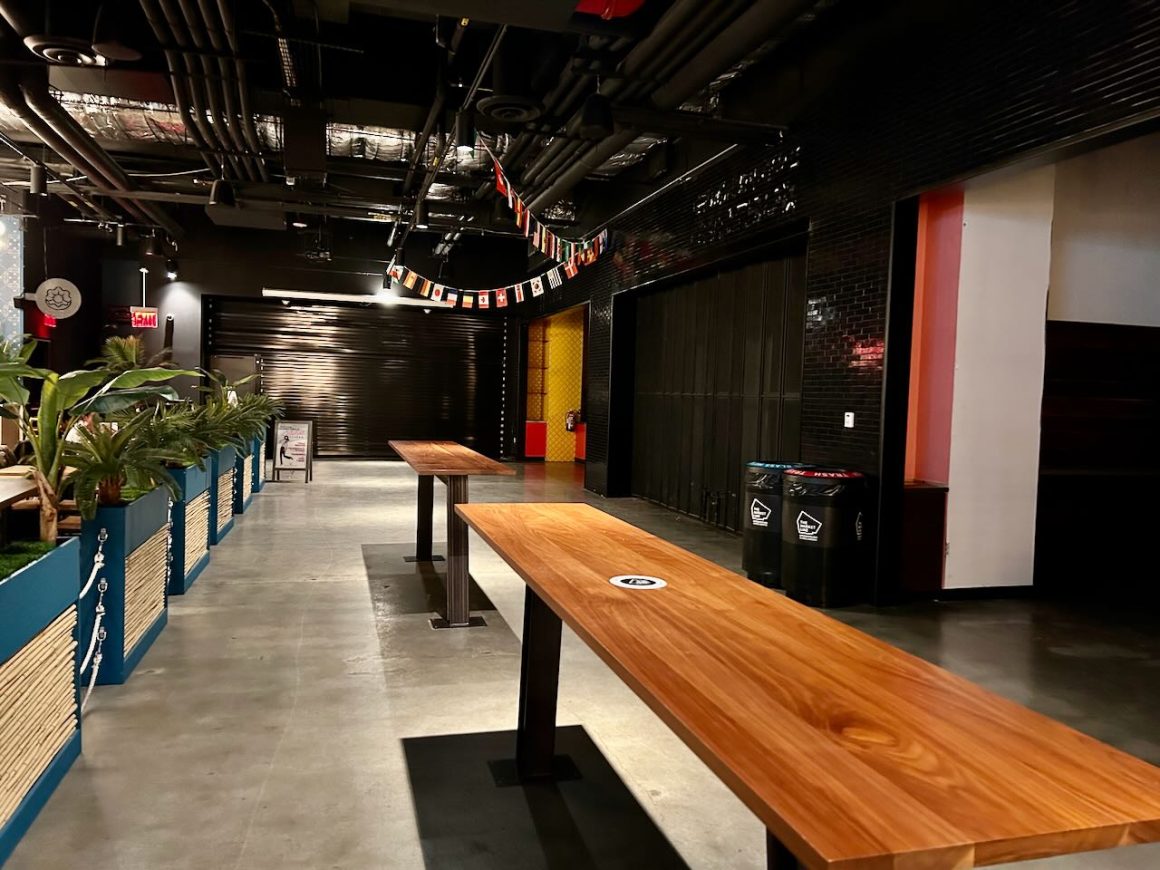
You probably saw the news a week ago that the Market Line, the subterranean food and retail space below the Essex Market, is closing in the spring.
The Essex Market, which is run by the city, will continue to operate. The Market Line, however, a centerpiece of the Essex Crossing mega project, will shutter in April. The developers, Delancey Street Associates, put out a statement, blaming the pandemic. “Since the onset of the pandemic,” they wrote, “we worked closely with Market Line vendors to help them weather a challenging economic environment, including providing rent abatements and ongoing rent deferrals. In the four years since Covid-19 and its effects on retail and food and beverage tenants, the Market Line and its vendors have continued to struggle.”
The Post suggested another culprit, blaming the over-saturation of food halls in New York City. Whatever the reason for the Market Line’s failure, it’s worth revisiting the original dream for the project, spelled out for us by developers back in 2015.
In our interview with Rohan Mehra and Andrew Katz of the Prusik Group (part of the development team), they laid out a grand vision for the space, saying, “We don’t have something like the great public markets you see in Europe, a place where all New Yorkers would come to shop, an amazing environment, a destination for the community, a place where they could get everything.”
They ended up creating a sprawling concourse by building tunnels under Suffolk and Norfolk streets, connecting the lower levels of three Essex Crossing buildings. Together with the Essex Market, the Market Line comprised 150,000 square feet. But only the first section of the Market Line opened. The other two-thirds never became operational.

At the time, they were confident the concept was sustainable. Katz explained, “You’ll come to the Market Line and there will be multiple price points. You’ll be able to get whatever you want, whether it’s your meat, your fish, your cheese, your jeans, your hats, you want to get your watch fixed. You’re going to get a haircut. You want to grab a sandwich. All those things in this market.”
He added, “I would argue that it could sustain itself with just the Lower East Side population. When you then expand that into what this will be — that we’re in the Lower East Side and the world comes to New York City to come to the Lower East Side — to see the Tenement Museum, walk over the Williamsburg Bridge — then it gets super, super exciting. The Lowline. All these things make it that much better. But our whole focus is to make it sustainable because it feeds the community. Everything else will handle itself.”
In their statement last week, the developers said, “We are evaluating uses for the underground space that will be sustainable for the long term.”
A spokesperson for the NYC Economic Development Corp, which runs Essex Market, told Commercial Observer, “We are saddened to learn about our downstairs neighbor Market Line’s closure, but we look forward to working with the developer on next steps for the space.”
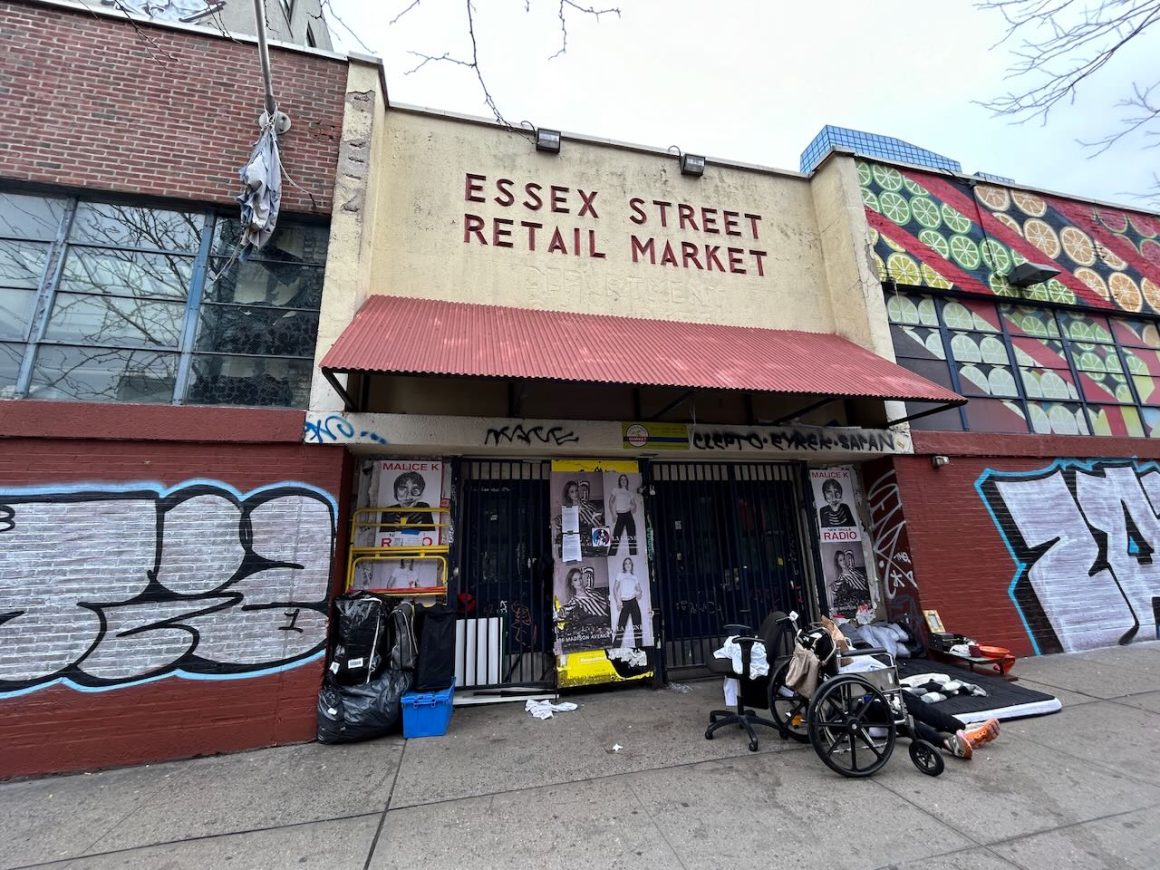
Meanwhile, two Essex Crossing sites, including the former home of the Essex Street Market, remain dormant. Those sites were meant to become mixed use buildings with residences above and commercial uses below.